

 NILAN EDITOR
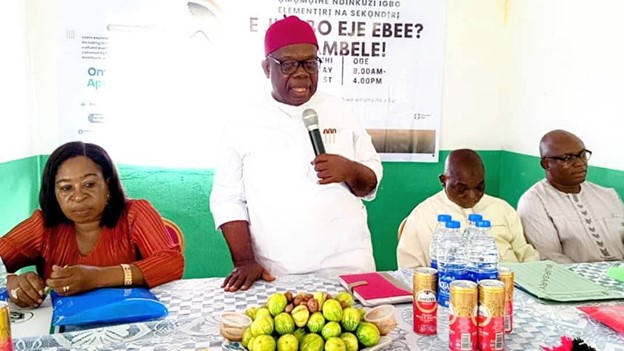
The Executive Director of the National Institute for Nigerian Languages (NINLAN), Aba, Professor Ogbonna Onuoha, has called on the Igbo people to speak, write, teach, and promote their language to the world. According to him, this is necessary to reverse the neglect the language has suffered over the years.
Professor Onuoha, a specialist in Linguistics and Nigerian Languages, made this call at a workshop organised by the developers of the Omenka App, an online platform dedicated to preserving and promoting Igbo language and culture, in collaboration with Indigenous Hands and Voices. The workshop, hosted by NINLAN in Aba, brought together teachers of the Igbo language from primary and secondary schools across the South-East region.
The main goal of the workshop was to address the widespread indifference toward the Igbo language. This negative attitude is often summed up in a popular saying: “E ji Igbo eje ebee? Ajambele,” which translates to, “What benefit will I get from speaking Igbo? Forget it.”
The Executive Director expressed concern over the disturbing apathy shown by native speakers of Igbo. He noted that this indifference is evident in their reluctance to speak the language, as well as their disregard for traditional Igbo attire and other customs that distinguish the Igbo people.
Professor Onuoha encouraged the workshop organisers and resource persons to identify the root causes of the challenges facing the growth and survival of the Igbo language. He also urged them to offer practical recommendations for overcoming these challenges.
The resource persons, all professors of Igbo language, addressed the audience entirely in Igbo. They focused on various aspects of Igbo identity that need a boost, including speaking the language at home and in school, singing Igbo songs, wearing traditional Igbo clothing, and telling Igbo folktales, among other cultural practices.
Professor Lucy Apakama of Alvan Ikoku Federal University of Education, Owerri, drew the attention of Igbo language teachers to the life and traditions of Ndigbo. She emphasised the symbiotic relationship that should exist between the teacher and the learner to help the language thrive. She also advised teachers to use modern technologies in their teaching to arouse and sustain students’ interest in the language.
Professor Nkechinyere Nwokoye, on her part, stressed the importance of using Standard Igbo when writing texts, speaking at events or ceremonies, and in oral communication. She warned against the use of local dialects by writers or speakers, noting that Standard Igbo greatly improves learners’ assimilation of knowledge and helps unify the Igbo people through shared and common symbols.
Professor Chukwuma Okeke of the University of Nigeria guided participants on how to apply modern scientific and technological tools and innovations in teaching and writing in Igbo. He encouraged teachers to acquire personal computers such as laptops or desktops, as well as Android phones. He also urged them to become proficient in word processing, emailing, and using the internet for gathering information.
Professor Okeke pointed out that using Android phones to teach Igbo language would capture the interest and attention of young people in secondary schools. He further encouraged teachers to familiarise themselves with technological tools such as Artificial Intelligence (AI), Grammarly, virtual tours, and many other systems. These tools, he noted, can add finesse to written texts and make the teaching and learning of Igbo more attractive and engaging.

Comments are closed